

{{ s.num }}
{{ s.meta }}
{{ s.t }}
{{ s.venue }}
{{ s.statement }}
With {{ s.artistsText }}.
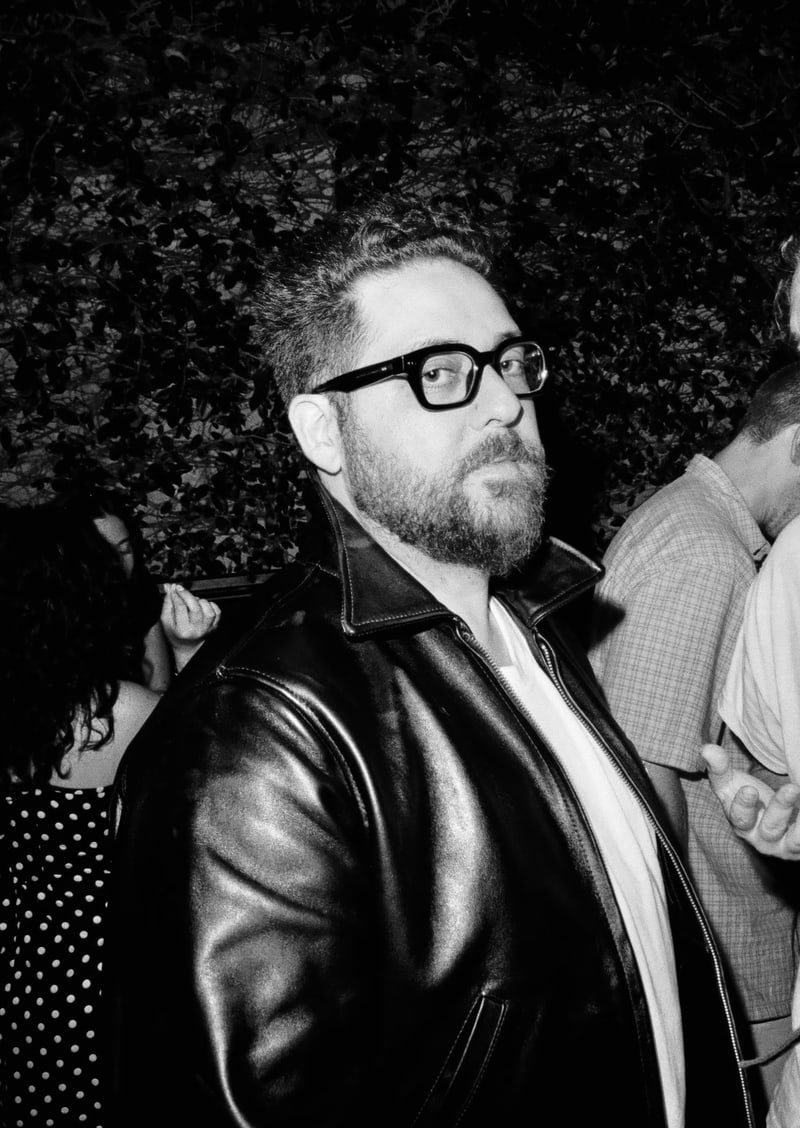
Paasha Motamedi (b. 1990, Del Mar, California) is an Iranian-Indonesian-American artist and filmmaker who lives and works in Los Angeles. His father's family is Iranian and his mother is Indonesian. He grew up on Coronado Island, where his mother taught him the flavors of Persian cooking in a kitchen straight out of Under the Tuscan Sun while the Food Network blared Emeril Live. In 2012 he graduated from NYU's Gallatin School of Individualized Study with a concentration in the economic and social history of costume and fashion. That training still guides his choice of materials.
He wrote before he made images. Since 2012 his features, artist profiles, interviews, and criticism have appeared in The Creative Independent, The Panafold, Unemployed Magazine, and Mid Cult. With The Haikuists, he has spent more than a decade improvising verse on a typewriter at live events for clients such as SpaceX, Tiffany & Co., Bloomingdale's, and National Geographic. His own poems approach migration and inherited history through the senses, and their cadence carries into his visual work.
After he got sober in 2015, he began shooting slow-motion video and stills. His pictures have since run in The New York Times, the Los Angeles Times, Hyperallergic, The Panafold, and No Tokens Journal. The work started on the street and turned toward personal reportage on diaspora and autochthony, the question of who counts as native to a place. Family Portrait, an exhibition at Hunter College in New York, was built entirely around his photographs. In his series Zero, every frame is the first on its roll of film, the one a camera needs before it can make a full exposure.
His paintings begin with Persian-style rugs that were made in factories. He applies oil stick and acrylic to them, along with saffron, black lime, pomegranate, sabzi, sand, and fire. Objects like these are orientalism priced for the mass market, and he treats that consumer fetish as his subject, alongside migration and the hybrid identity of third-culture kids. Perfumes he composes to evoke the dishes of his childhood kitchen, gheimeh and beef rendang among them, accompany the rugs. He works in cycles, and long pauses separate the bursts of production.
He started curating in 2019, and the shows he has organized in Los Angeles include Second World at Known Studio and one at Wonzimer. He held the IKEA Residency in 2023 and joined the Wonzimer Artist Residency Program in 2024.
Film is the newest part of his practice. Opa, Last Days (2026, 15:11) covers the final two days of his grandfather's life, and Opa dies before the documentary ends. Motamedi was its director, producer, cinematographer, and editor, and it is now in festival submission. Everything he makes is meant to be deeply personal and as true to life as possible. He is making a series of shorts and developing a docufiction in which a real couple restages an argument they already had. For that project he looks to two films in which people play themselves, Abbas Kiarostami's Close-Up and Chloé Zhao's The Rider. He wrote a questionnaire for each partner to answer before production, and their accounts of the fight will guide his blocking and framing. The scenes will be built from long takes and empty space.
The New York Times · Los Angeles Times · Hyperallergic · The Panafold · No Tokens Journal
The Creative Independent · The Panafold · Unemployed Magazine · Mid Cult
paasha.motamedi@gmail.com · 619.252.2722 · @paashamotamedi · Los Angeles

A series of ten short films is in production and will be listed here as each one is finished.
The final two days of the artist's grandfather's life. Opa dies before the film ends. Filmed, produced and edited by his grandson alone, in black and white, it is the first part of a larger work about the house the family left behind.
The film is not screening online. Programmers, festivals and press are welcome to request a link.
After 2015, the practice began again here. The camera slowed down first.
These paintings begin with Persian-style rugs that were made in factories. I apply oil stick and acrylic to them, along with saffron, black lime, pomegranate, sabzi, sand, and fire. Objects like these are orientalism priced for the mass market, and I treat that consumer fetish as my subject, alongside migration and the hybrid identity of third-culture kids.
Personal reportage on diaspora, belonging, and autochthony, grown out of street photography.
{{ photoProject.statement }}

Persian cuisine in an "Under the Tuscan Sun" kitchen; the Food Network is blasting Emeril Live, as my mom teaches me about the Iranian palette where, here, butter and fenugreek are trellised by pink and black peppercorn as a treacly backbone is endowed by oud and ambergris. The room spins. Gourmand would be the lazy way to describe this savory, unctuous tandem of memory and opulence.
The perfumes are composed to evoke the dishes of that kitchen, gheimeh and beef rendang among them, and they accompany the rug paintings as an invisible part of the work.
I wrote before I made images. Features, artist profiles, interviews, and criticism since 2012, mostly about people who make things in Los Angeles. The poems have their own room.
Longer work, fiction and a feature screenplay, is in development.
Exhibitions I have organized in Los Angeles since 2019, with the artists who were in them, and the residencies I have held.
{{ s.statement }}
With {{ s.artistsText }}.
Editorial and portrait photography on assignment, for publications and for people.
view photographsPhotographic documentation of paintings and works on paper, for artists, galleries, and estates.
the serviceLive poems typed to order for holiday parties, brand activations, weddings, and conferences. Each guest leaves with the only copy.
how it worksFeatures, interviews, and criticism on commission, alongside the poetry.
I photograph people in their own space: at home, at work, wherever they are most themselves. Assignments for publications, brands and agencies are quoted on request.
A portrait session is an hour or two in your own space: at home, at work, wherever you are most yourself. Available light, in color. Sessions in Los Angeles run $150 to $250 depending on length, with 35mm film as an add-on, and you leave with a set of finished pictures.
Assignments for publications and brands are a different conversation, under Editorial & Portraits.
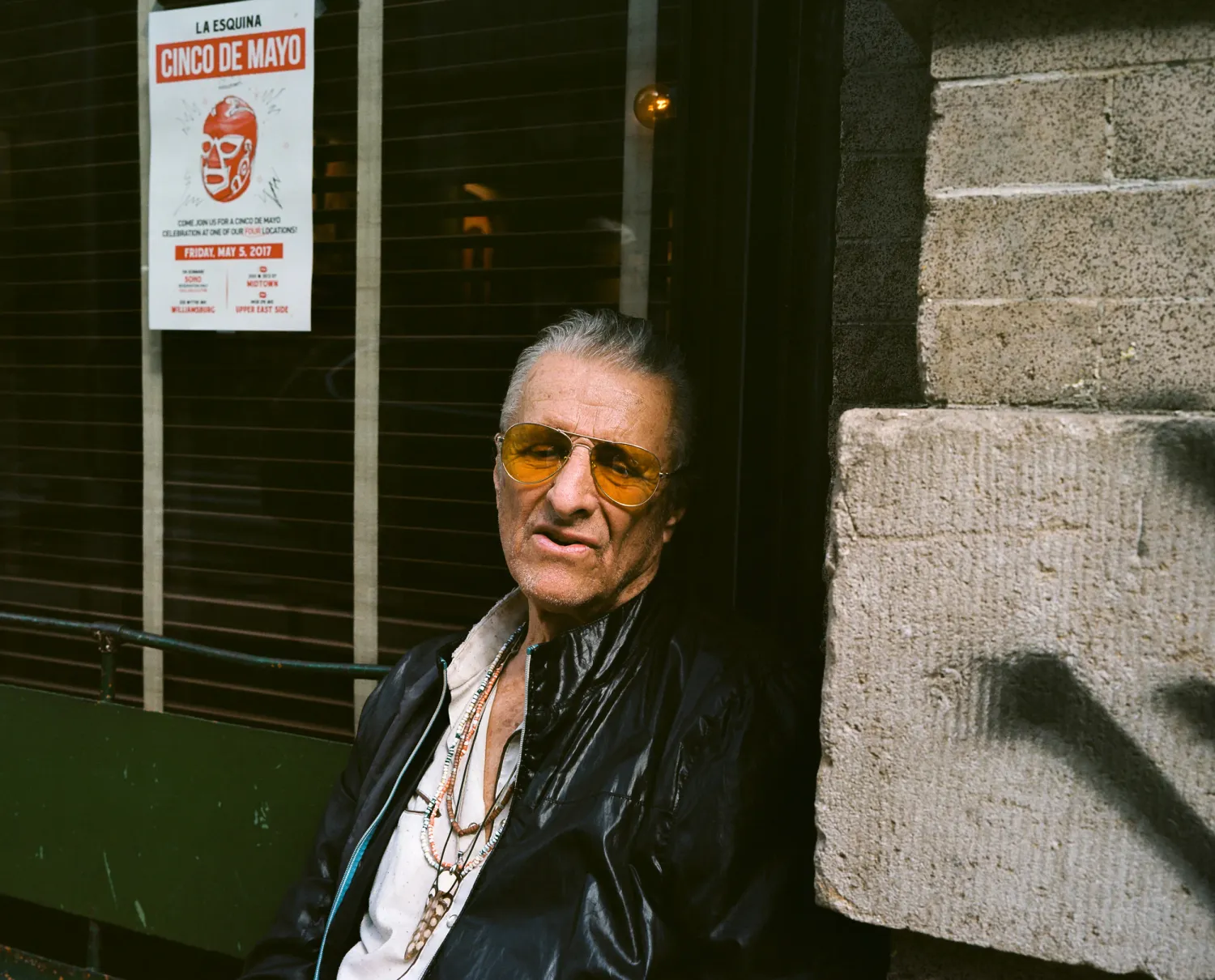
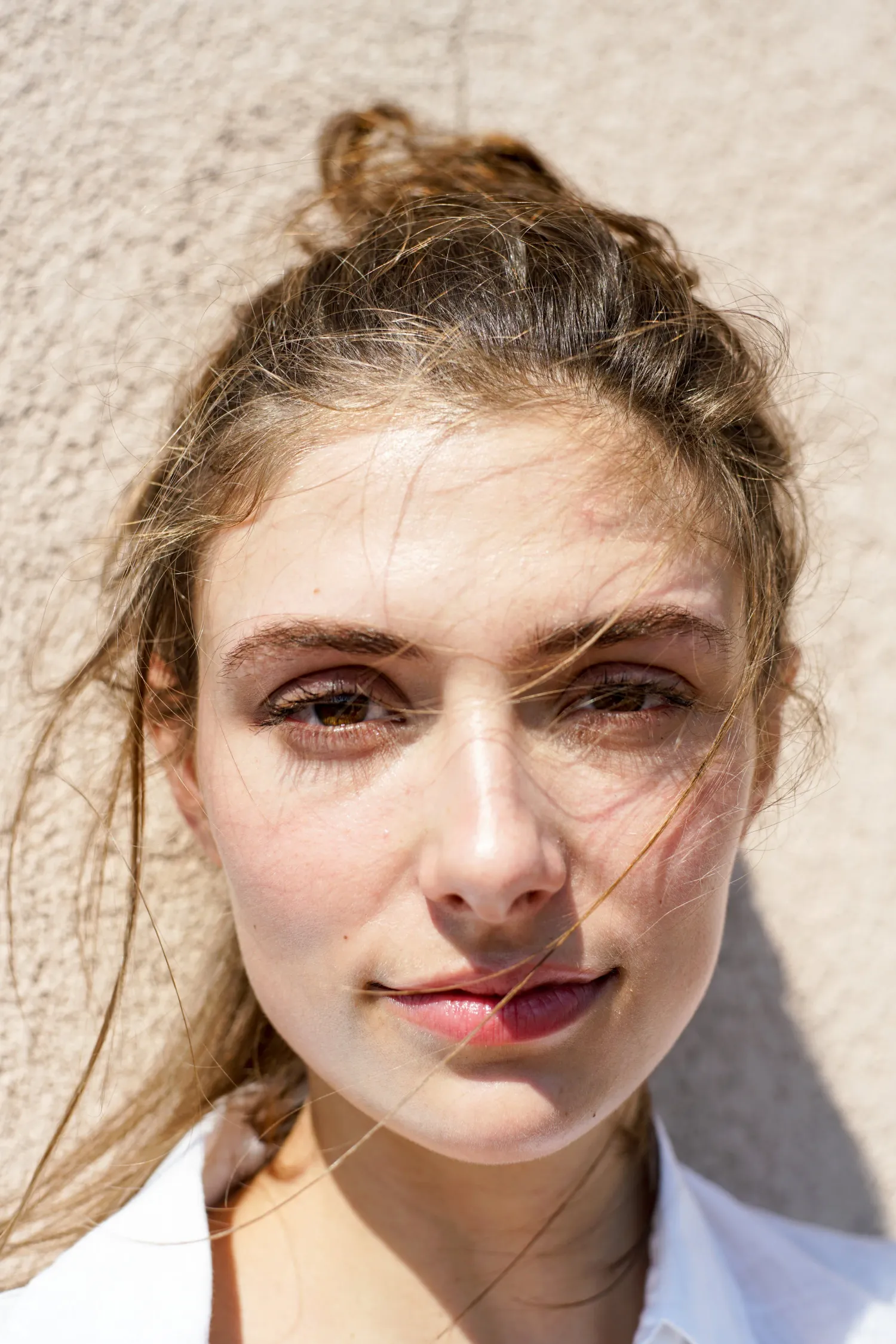
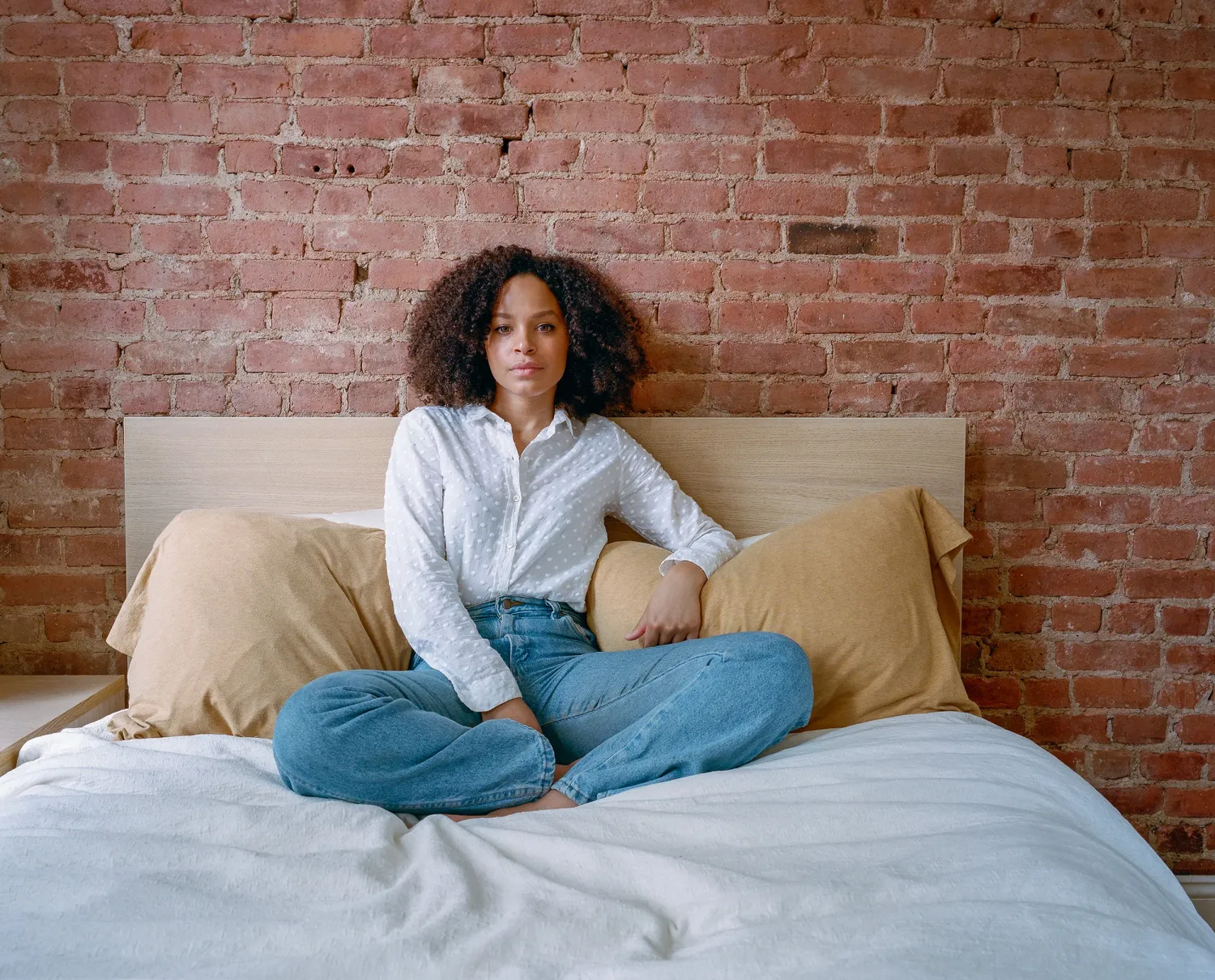
A guest sits down across from me and offers a name, a worry, a joke, or nothing at all. A few minutes later they stand up holding the only copy of a poem that did not exist before they sat down. Holiday parties, brand activations, weddings, conferences.

I arrive early with a manual typewriter and a stack of card stock, and take the seat you have set for me.
I ask what the poem should be about. Most people say a person. Some say the open bar. Either works.
People gather and read over shoulders. A line forms, and the line is part of the evening.
No carbon, no photo unless they take one. The usual reaction is happy tears. I write longer than most.
Typed on a Smith-Corona Silent for guests who gave me a name and a minute. First names only. Each card opens to its transcription.
to name a few
Eleven years at the typewriter, through an agency and now on my own. One of the poems went to space: a guest I wrote for at Yuri's Night at the California Science Center told me a year later, at a party in Bel Air, that they had taken it with them. At a law firm's western party in Palm Springs in October 2026, seven people cried at my table, all the good kind.
For large rooms I bring another typewriter poet I trust, with their own machine, so nobody waits long. Two tables, two lines, twice the poems.

Your event name, date, or logo stamped on every card before it leaves the table. The poem is the keepsake; the stamp says where it came from.


The practice
I can usually tell what someone needs before they give me a topic.
People have tattooed these poems on their bodies and read them aloud as wedding vows. One of them went to space.


{{ f.a }}
Send the date, the city, and a rough head count. I reply within a day with availability and the rate sheet. Two-hour minimum; travel outside Los Angeles quoted up front.
Looking for a portrait instead? Portrait sessions in Los Angeles

Photographic documentation of paintings and works on paper, for artists, galleries, and estates: the full work square to the frame, plus details at working resolution.
That page isn't here. Everything is reachable from the sections below.

